Home Workouts Without Expensive Equipment
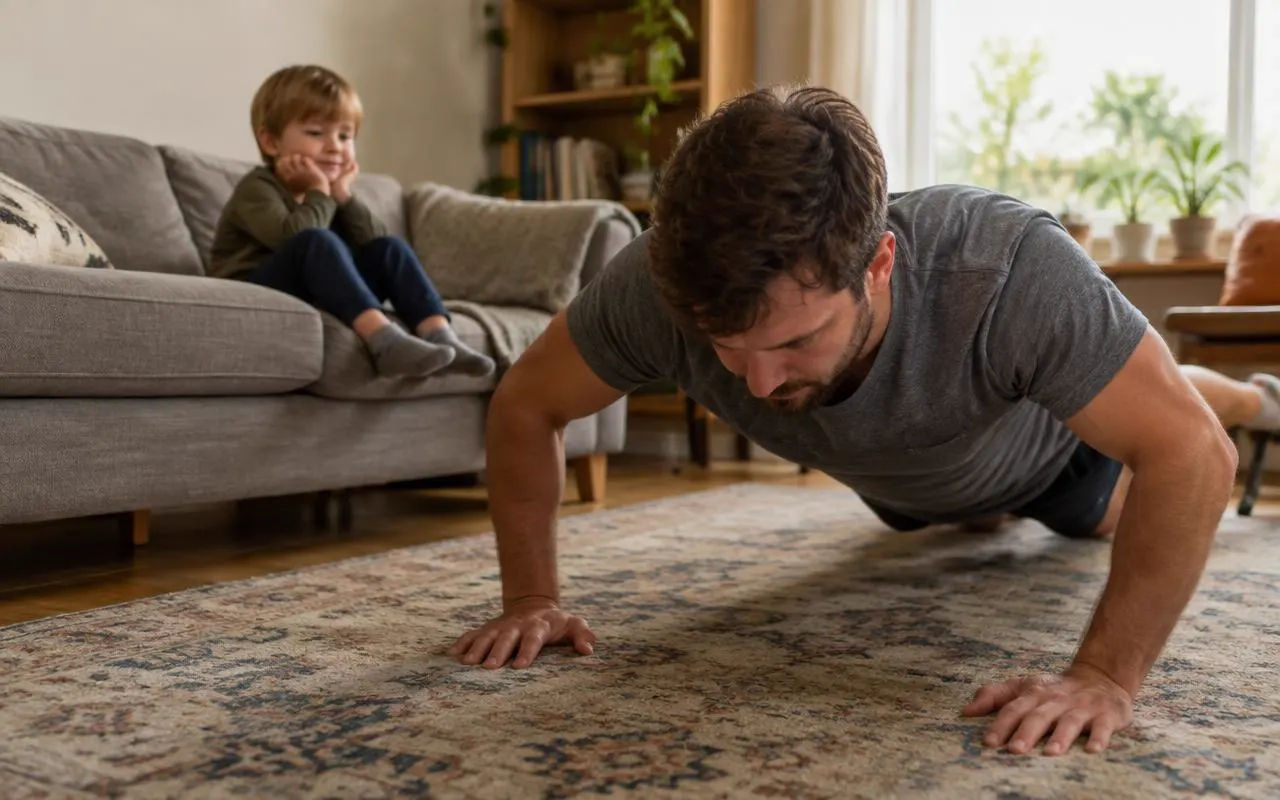
Gym memberships, commuting time, and crowded equipment can all become barriers to exercise. Training at home removes many of them. With bodyweight exercises and a few household items, you can build strength, endurance, and consistency — no expensive equipment required.
The case for home training
Home workouts are convenient, private, and flexible. You can train early in the morning, during a lunch break, or after the kids are asleep. Because the barrier to starting is so low, home training can be particularly effective for building consistency — which is often the deciding factor in long-term progress.
Setting up your space
You need less space than you might think — roughly the area of a yoga mat plus room to extend your arms. A few tips:
- Choose a floor with good grip, or use a mat.
- Clear away trip hazards and fragile items.
- Identify a sturdy chair or step that will not slide.
- Keep a water bottle and towel nearby.
- If you live upstairs, favor low-impact moves to keep neighbors happy.
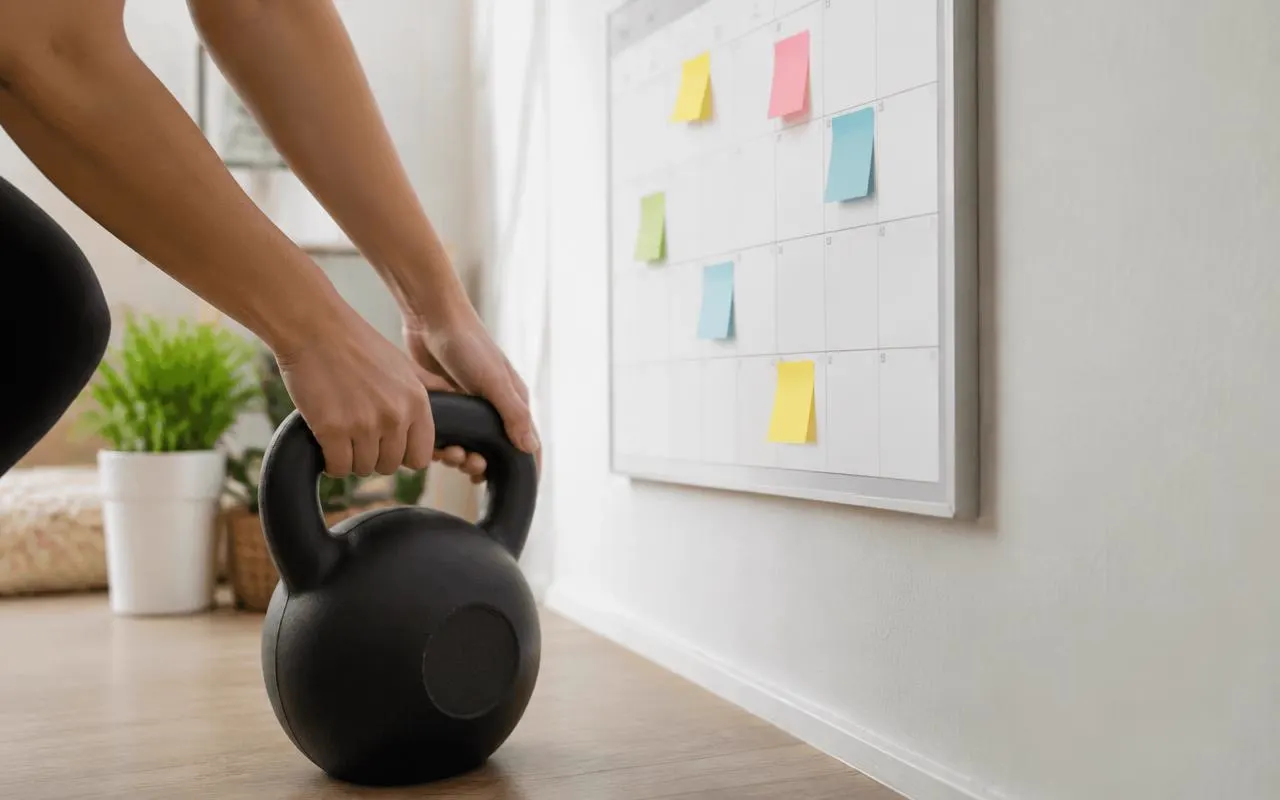
Leaving your mat out in a visible spot can serve as a helpful reminder to train.
Key bodyweight exercises
Lower body
- Squat: sit back and down, keeping your chest tall.
- Reverse lunge: step back and lower, then return. Hold a wall for balance if needed.
- Glute bridge: lift hips from the floor by pressing through your heels.
- Step-up: step onto a sturdy stair or low platform.
Upper body
- Push-up: start on a wall or counter and progress toward the floor.
- Chair dip: with hands on a sturdy chair behind you, bend and straighten your elbows. Keep the range comfortable for your shoulders.
- Towel row: loop a towel around a sturdy post and lean back, pulling yourself forward.
Core
- Plank and side plank.
- Dead bug for controlled limb movement.
- Bird dog for back and hip stability.
Two sample circuits
Beginner circuit (about 20 minutes)
Perform each exercise for 30 seconds, rest 30 seconds, and complete 2–3 rounds:
- Squat to chair
- Wall push-up
- Glute bridge
- March in place
- Dead bug
Intermediate circuit (about 30 minutes)
Perform each exercise for 40 seconds, rest 20 seconds, and complete 3–4 rounds:
- Reverse lunges (alternating)
- Floor push-ups
- Single-leg glute bridge
- Mountain climbers (slow and controlled)
- Side plank (switch sides halfway)
- Step-ups
Always begin with a 5-minute warm-up. For a full plan with a weekly schedule, see our Home Workouts program.
How to progress without weights
Without heavier dumbbells to reach for, you increase difficulty in other ways:
- Leverage: move push-ups from a wall to a counter to the floor.
- Single-limb variations: progress from bridges to single-leg bridges, squats to split squats.
- Tempo: lower slowly over three to four seconds.
- Pauses: hold the hardest part of the movement for two seconds.
- Volume: add repetitions, rounds, or time.
- Density: reduce rest between exercises.
Change one variable at a time and track your workouts so you can see improvement.
Affordable upgrades
If you want to expand your options later, a few inexpensive items add a lot of variety:
- Resistance bands — versatile for rows, presses, and leg work.
- A quality mat — comfort for floor exercises.
- A doorway pull-up bar — for experienced users, if your door frame is suitable.
- Adjustable dumbbells — a bigger investment, but space-efficient for long-term progress.
Home training is not a compromise — for many people it is the most sustainable option. To learn the principles behind effective workouts, read Strength Training Fundamentals for Beginners.
Fitness disclaimer: This article provides general educational information and is not a substitute for advice from a physician or qualified professional. Consult a healthcare provider before starting a new exercise program, especially if you have a medical condition or injury. Read the full disclaimer.