Strength Training Fundamentals for Beginners

Strength training can seem intimidating, especially in a gym full of unfamiliar equipment. Yet its principles are straightforward, and you can begin effectively with a few dumbbells or even just your body weight. This guide covers the essentials you need to train safely and make steady progress.
Why strength training matters
Muscle-strengthening activity is widely recommended for adults as part of a balanced exercise routine. Beyond building strength, it supports the ability to perform everyday tasks — lifting, carrying, climbing stairs — and helps maintain muscle as we age. Many people also find that getting stronger boosts their confidence.
Strength training is not only for people who want large muscles. Programs can be tailored to virtually any goal or experience level.
The fundamental movement patterns
Rather than thinking in terms of individual muscles, it is useful to think in movement patterns. A balanced program includes exercises from each category:
- Squat: bending at the hips, knees, and ankles together — goblet squats, chair squats, split squats.
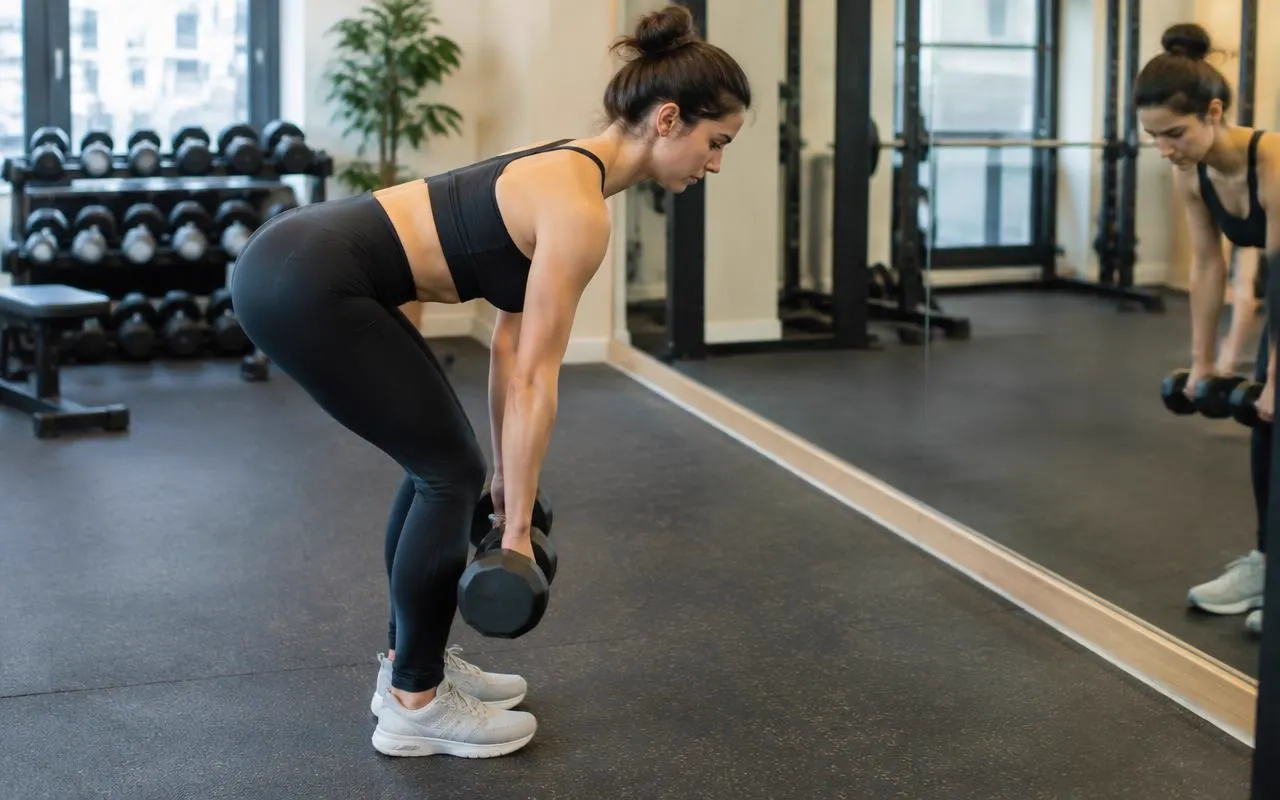
- Hinge: bending primarily at the hips with a neutral spine — Romanian deadlifts, glute bridges, hip thrusts.
- Push: pressing away from your body — push-ups, bench press, overhead press.
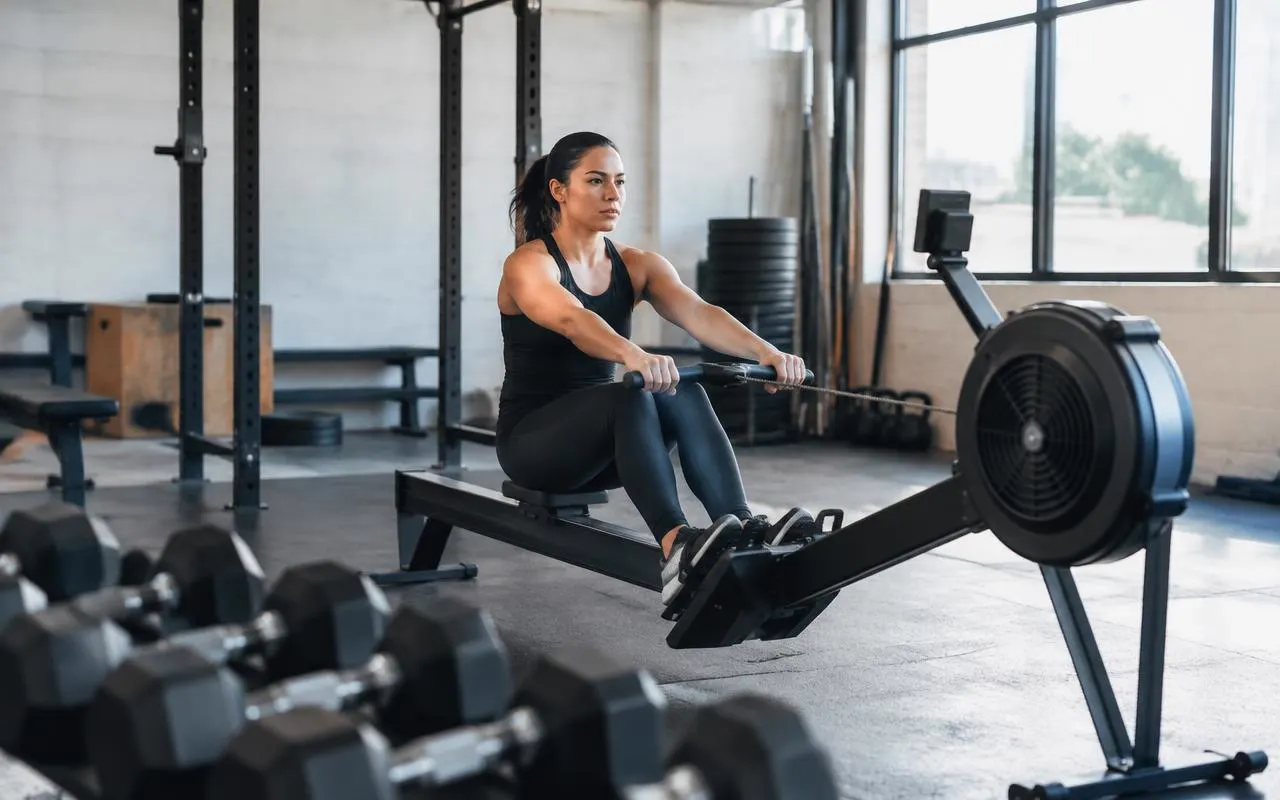
- Pull: drawing toward your body — rows, pulldowns, pull-ups.
- Carry: holding weight while walking — farmer’s and suitcase carries.
- Core stability: resisting unwanted movement — planks, dead bugs, Pallof presses.
Covering these patterns two to three times per week trains virtually every major muscle group.
Sets, reps, and rest
A repetition (rep) is one complete movement. A set is a group of consecutive reps. For example, “3 × 10” means three sets of ten repetitions.
For beginners, a practical range is two to three sets of 8–12 repetitions per exercise. This range lets you practice technique with manageable loads while still providing an effective training stimulus. Rest about 60–120 seconds between sets — longer for bigger, more demanding exercises.
Choosing the right weight
The right weight lets you complete your target reps with good form while feeling that you could perform roughly two or three more. This concept is sometimes called “reps in reserve.”
- If you could easily do five or more extra reps, the weight is probably too light.
- If your form breaks down before reaching the target, it is too heavy.
- Start conservatively in your first sessions. It is easy to add weight next time.
Record what you lift. A simple log turns guesswork into a clear plan for your next session.
Progressive overload
To keep improving, your body needs a gradually increasing challenge. This principle is known as progressive overload. You can progress by:
- Adding a small amount of weight.
- Performing more repetitions with the same weight.
- Adding a set.
- Improving control and range of motion.
A simple and effective method is double progression: once you can complete all sets at the top of your rep range with good form, increase the weight slightly and work back up. Progress will be faster at first and slow over time — that is normal.
A sample beginner workout
Perform this full-body workout two to three times per week with at least one rest day between sessions:
- Goblet squat — 3 × 8–10
- Dumbbell Romanian deadlift — 3 × 8–10
- Push-up (incline if needed) — 3 × 8–12
- One-arm dumbbell row — 3 × 10 per side
- Farmer’s carry — 3 × 30 meters
- Dead bug — 2 × 8 per side
Begin with a 5–10 minute warm-up of light cardio and bodyweight versions of the exercises. For a full program with schedule and progression, see our Strength Training program.
Technique principles
Control the movement
Lower weights deliberately — about two to three seconds — rather than letting them drop. Control improves safety and makes the muscles work through the full range.
Brace and breathe
Before each rep, take a breath and gently tighten your midsection as if preparing for a light poke to the stomach. Exhale during or after the effort. Avoid holding your breath for long periods.
Use a comfortable range of motion
Move through the range you can control without pain. Range often improves with practice.
Quality before quantity
If form deteriorates, end the set. Training consistently with good technique produces better long-term results than pushing through sloppy reps.
For more guidance on avoiding common errors, read Common Workout Mistakes and How to Avoid Them. If you have joint problems, high blood pressure, or other health concerns, consult a healthcare professional before starting.
Fitness disclaimer: This article provides general educational information and is not a substitute for advice from a physician or qualified professional. Consult a healthcare provider before starting a new exercise program, especially if you have a medical condition or injury. Read the full disclaimer.