How to Start Working Out: A Practical Beginner’s Guide
Starting to exercise can feel surprisingly complicated. There is a flood of advice online, much of it contradictory, and plenty of programs seem designed for people who are already fit. The good news is that the fundamentals are simple. You need a little structure, realistic expectations, and a plan that respects your current life. This guide walks you through each step.
Start with the right mindset
The most useful shift for beginners is to treat exercise as a skill you are learning rather than a test you might fail. Skills improve with practice. Your first sessions are not meant to be impressive; they are meant to teach your body the movements and teach your brain that exercise is now part of your week.
It also helps to separate effort from outcome. You cannot control exactly how quickly your body will change, but you can control whether you show up for three short sessions this week. Building your sense of success around actions you control makes motivation far more stable.
Aim to finish each workout feeling like you could have done a bit more. That feeling is what brings you back next time.
Know your starting point
Before choosing a plan, take an honest look at where you are. Ask yourself:
- How active am I right now? Do I walk regularly, or mostly sit?
- How much time can I realistically commit each week — not ideally, but realistically?
- Do I have any injuries, health conditions, or medications that might affect exercise?
- What kinds of movement have I enjoyed in the past?
If you have a chronic condition, are pregnant, are recovering from an injury, or experience symptoms such as chest discomfort or dizziness with exertion, speak with a healthcare professional before starting. For most healthy adults, beginning with light to moderate activity is a reasonable approach.
The three ingredients of a balanced routine
A well-rounded routine includes three broad types of activity. You do not need all three perfectly from day one, but it helps to know where you are heading.
1. Aerobic activity
Activities that raise your heart rate for a sustained period — brisk walking, cycling, swimming, dancing. Public health guidelines in the United States encourage adults to build toward regular moderate aerobic activity across the week. If that sounds like a lot, remember that any amount is better than none, and you can build gradually.
2. Muscle-strengthening activity
Exercises that work your muscles against resistance, such as squats, push-ups, or lifting weights. Strength training supports everyday tasks, posture, and balance. Two sessions per week is a common recommendation.
3. Mobility and balance
Gentle stretching and controlled movement through your joints’ range of motion, plus balance practice. These help you move comfortably and become increasingly valuable with age.
Your first two weeks
Here is a simple template many beginners can follow. Adjust the days to fit your schedule.
- Two strength sessions of about 20 minutes (for example Monday and Thursday).
- Two or three walks of 10–20 minutes at a comfortable, slightly brisk pace.
- One or two short mobility sessions of 5–10 minutes, perhaps in the evening.
- At least one full rest day.
That may look modest, and that is intentional. Doing slightly less than you think you can in the first two weeks helps you avoid excessive soreness and builds momentum. If you want a ready-made structure, our Beginner Fitness program lays out eight weeks in detail.
Five beginner exercises
These movements cover the main patterns your body uses every day. Perform each for one to two sets of 8–10 repetitions, resting as needed.
Chair squat
Stand in front of a sturdy chair, feet about hip-width apart. Push your hips back and lower until you lightly touch the seat, then stand up by pressing through your whole foot. This builds the leg strength you use to stand up, climb stairs, and get off the floor.
Wall or counter push-up
Place your hands on a wall or kitchen counter. Keeping your body straight, bend your elbows to bring your chest closer, then push away. The lower the surface, the harder the exercise.
Glute bridge
Lie on your back with knees bent and feet flat. Press through your heels to lift your hips until your body forms a line from shoulders to knees. Lower slowly. This strengthens the hips and supports the lower back.
Band or towel row
Anchor a resistance band at chest height and pull the handles toward your ribs, squeezing your shoulder blades together. Without a band, you can perform shoulder blade squeezes. Pulling movements balance out the pushing we do all day.
Supported balance hold
Hold the back of a chair and lift one foot slightly off the floor for 15–30 seconds. Switch sides. Gradually reduce how much you rely on your hands.
How hard should it feel?
A simple tool is the “talk test.” During aerobic activity at a moderate intensity, you should be able to talk in sentences but not sing. For strength exercises, aim to finish each set feeling that you could do two or three more repetitions with good form.
Some muscle soreness a day or two after your first sessions is common. It typically fades as your body adapts. Sharp pain, joint pain, or pain that changes how you move is different — stop that exercise and consider seeking professional advice if it persists.
Making it stick
Consistency matters more than any specific exercise. A few strategies that help:
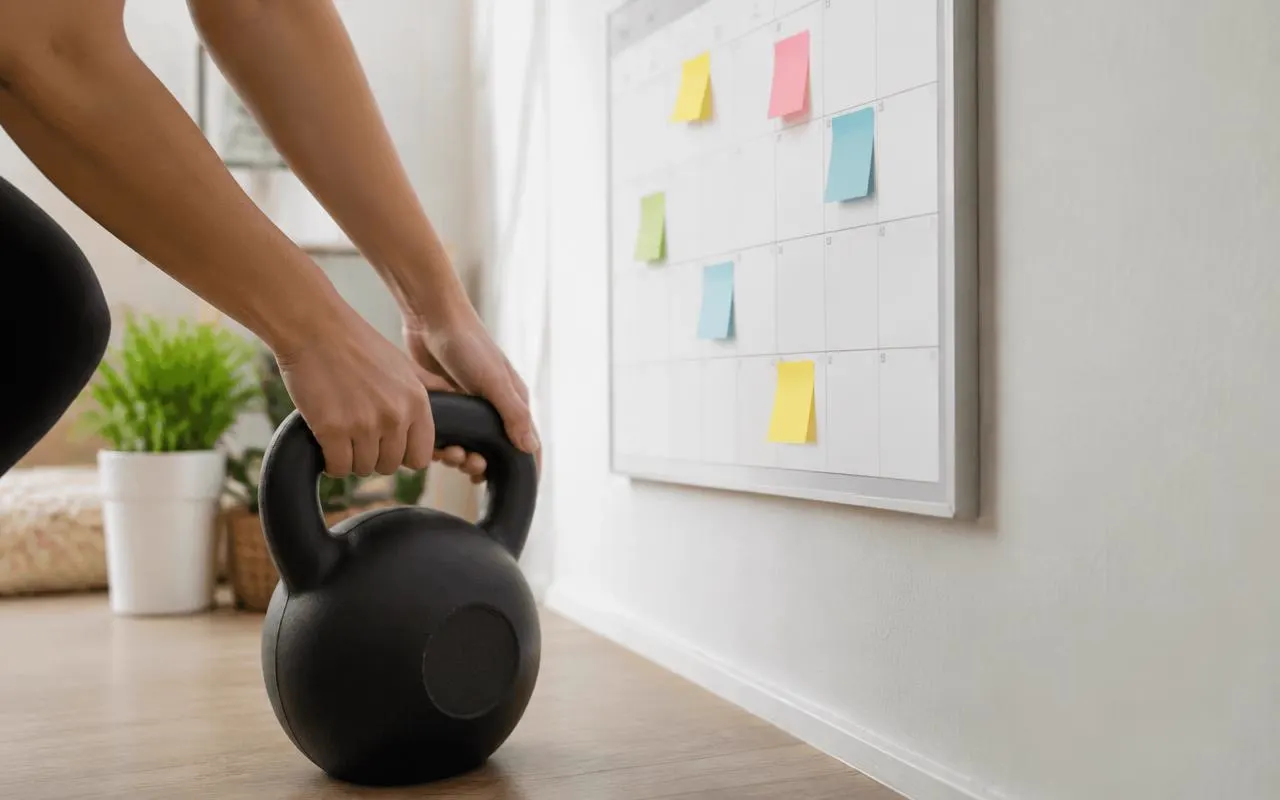
- Schedule it. Put workouts in your calendar like appointments.
- Lower the barrier. Lay out clothes the night before; keep sessions short.
- Track what you do. A simple checklist provides satisfying evidence of progress.
- Expect imperfect weeks. When you miss a session, just do the next one. There is no need to “make up” for it.
After four to eight weeks, review how things are going. Many people find they are ready to add a third strength session, lengthen their walks, or try something new such as running. For more on keeping momentum, read How to Stay Motivated to Exercise Consistently.
The best workout plan is the one you will actually follow. Start small, be patient, and let consistency do the heavy lifting.
Fitness disclaimer: This article provides general educational information and is not a substitute for advice from a physician or qualified professional. Consult a healthcare provider before starting a new exercise program, especially if you have a medical condition or injury. Read the full disclaimer.