Fitness guide
Training Planning
How to organize workouts across the week and the months so progress stays steady and sustainable.
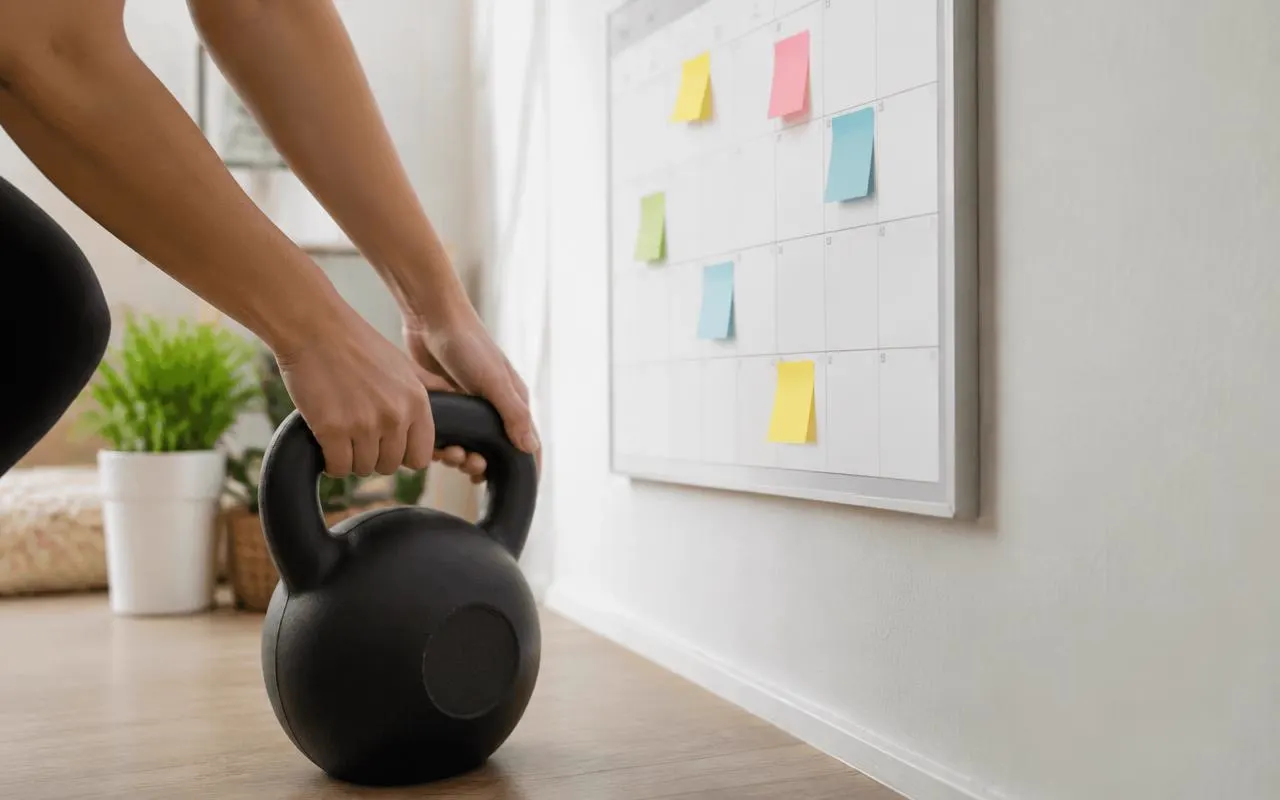
A good plan turns intentions into actions. It decides what you do, when you do it, and how you will progress — so each session builds on the last. This guide explains how to plan at two levels: the week and the months ahead.
Planning principles
- Specificity: train in ways that match your goals. Want to run farther? Running should be a central part of your plan.
- Progressive overload: increase challenge gradually over time.
- Recovery: adaptation happens between sessions, so schedule rest deliberately.
- Consistency: a plan you can follow beats an optimal plan you cannot.
- Individualization: adjust to your experience, schedule, and preferences.
Designing a week
Start with your realistic available time. Most people do well with two to four structured sessions per week plus daily light activity. Place harder sessions on days you are most likely to have energy, with lighter days or rest between them.
A balanced general fitness week might include two or three full-body strength sessions, two aerobic sessions (mostly at an easy, conversational pace), short mobility work, and at least one full rest day. See detailed templates in Building a Sustainable Weekly Workout Routine.
Planning across months
Think in blocks of four to eight weeks. During a block, follow the same core exercises and progress them gradually. At the end of each block:
- Take a lighter “deload” week, reducing volume by roughly a third.
- Review what improved and what felt difficult.
- Adjust exercises, volume, or goals for the next block.
This rhythm — build, recover, review — supports steady progress while managing fatigue. It also gives you natural checkpoints to update goals.
Tracking and reviewing
Record each session: exercises, weights, sets, reps, durations, and a quick note on how you felt. Over time, your log reveals patterns. Are certain lifts stalling? Do you consistently miss Friday sessions? Is sleep affecting performance?
Use those insights to refine your plan. Planning is not a one-time event; it is an ongoing conversation between your intentions and your real-life results.
General educational information only — not medical advice. See our Fitness Disclaimer.
Recommended articles
- Building a Sustainable Weekly Workout Routine
- How to Combine Strength Training and Cardio
- How to Set Realistic Fitness Goals
- The Role of Consistency in Long-Term Fitness Progress
Related programs
Other guides
Questions about a program?
Send us a note and we will point you toward resources that fit your experience and goals.